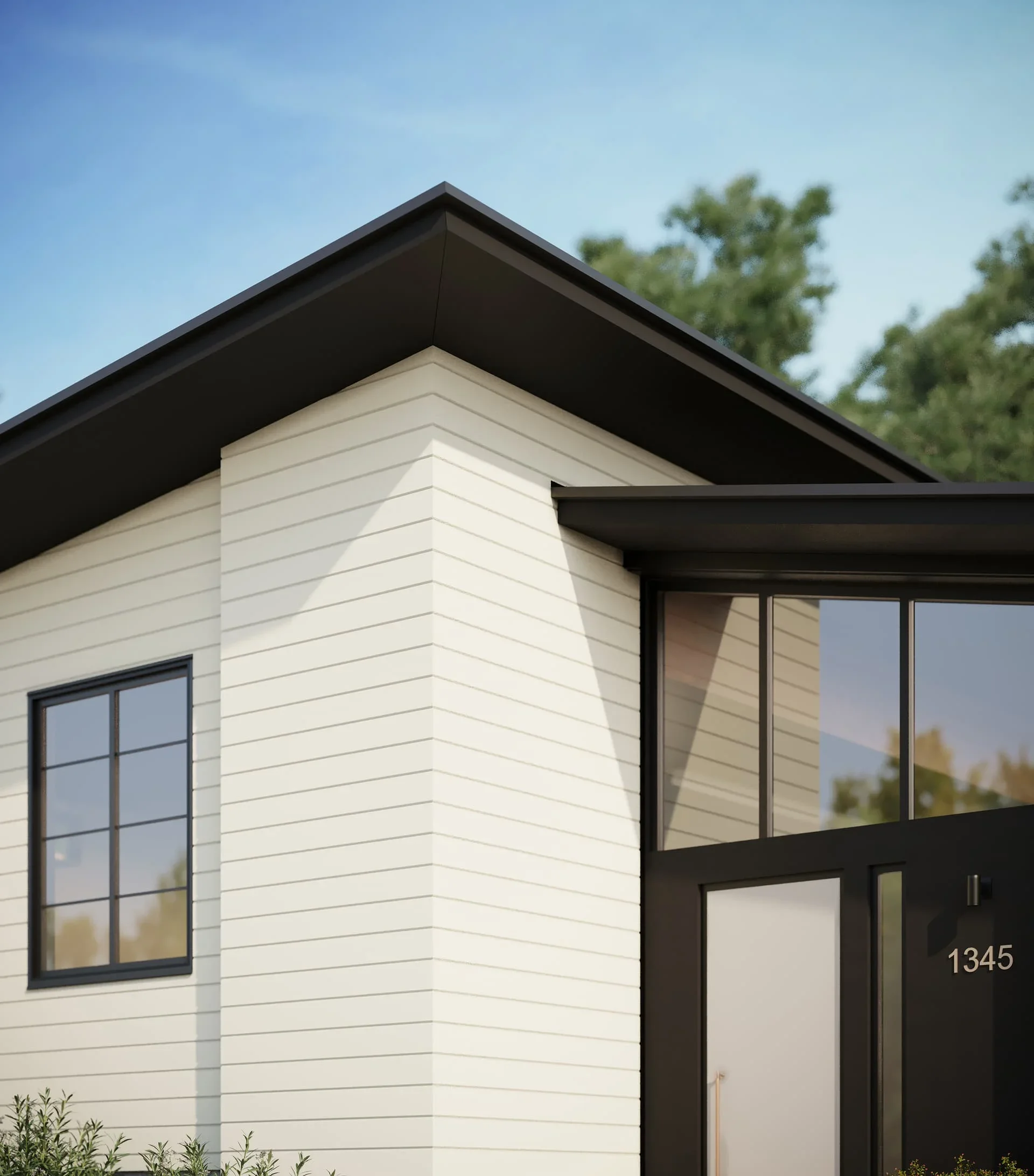
When you pick new exterior siding panels for your home, you’re deciding on more than looks. You’re also choosing long-term protection, insulation, and the overall cost to side your house for the next 20 to 40 years.
What Is Home Siding?
- Energy efficiency
- Home value
- Insulation
- Weather resilience
- Curb appeal
Read more: Calgary Roofing and Siding: What to Replace First in 2026
Key Factors to Consider When Choose Siding
■ Climate Performance
- In Alberta and Saskatchewan, you need siding that can withstand freeze-thaw cycles.
- BC requires moisture-resistant siding.
- Ontario requires wind-resistant materials.
■ Cost & Budget
■ Maintenance Requirements
- Some materials (such as wood and stucco) require regular upkeep.
- Others (metal, vinyl, fibre cement) are low-maintenance.
■ Appearance / House Siding Ideas
■ Installation Process
- Some types, such as exterior siding panels 4x8, are easy and cost-effective.
- Others require skilled installers (fibre cement, stone).
Popular Siding Types Comparison (Table)
| Siding Type | Average Cost (Installed) | Lifespan | Pros | Cons | Best For | |
|---|---|---|---|---|---|---|
| Vinyl Siding | $6-$12 per sq.ft. | 20–30 years |
• Most affordable siding option • Low maintenance • Wide color selection • Water-resistant • Easy to replace panels |
• Can crack in extreme cold • Fades under UV • Lower insulation unless upgraded |
Budget-friendly renovations, rental properties, and fast exterior refresh | |
| Metal Siding (Steel / Aluminum / Corrugated) | $15-$30 per sq.ft. | 50+ years |
• Extremely durable • Fire- and moisture-resistant • Modern appearance • Low maintenance • Ideal for harsh climates |
• Higher upfront cost • Aluminum can dent • Steel requires anti-rust coating |
Modern homes, long-term durability, and high-wind or cold climate areas | |
| James Hardie (Fibre Cement Siding) | $12-$25 per sq.ft. | 40–50 years |
• Top-rated house siding • Fire-, pest-, and moisture-resistant • Excellent for Canadian weather • Premium appearance • Very long lifespan |
• Higher installation cost • Requires expert installers |
Long-term home upgrades, premium exteriors, harsh weather protection |
Vinyl Siding Panels
- Low cost (among the most affordable siding options)
- Huge variety of colours & textures
- Low maintenance
- Doesn’t rot
- Easy to install
- Can crack in extreme cold
- Lower insulation value unless upgraded
- Not as premium-looking as Hardie or metal
Fibre Cement (James Hardie)
- Fire-resistant
- Extremely durable
- Pest-proof
- Great for wet or cold climates
- Long lifespan (up to 70 years)
- Beautiful look
- Higher initial investment
- Requires professional installation
Metal Siding
- Incredible longevity
- Strong resistance to moisture, pests, and wind gusts
- Perfect for the Canadian climate (Alberta, BC and beyond)
- Low or no maintenance
- Works for both modern & rustic house siding styles
- Higher upfront cost
- Steel requires an anti-rust coating to help prevent rust when exposed to moisture.
Additional Exterior Siding Options
Engineered Wood
- Offers a warm, attractive wood-like appearance
- More durable and weather-resistant than real wood
- Lightweight material that is easy to handle and install
- More budget-friendly than natural cedar or oak siding
- Needs sealing and occasional maintenance to stay protected
- Not as low-maintenance as vinyl or metal siding
Natural Wood Siding
- Beautiful, natural appearance
- Perfect for rustic, cottage-style, or high-end homes
- High maintenance
- Vulnerable to rot, insects, and weather
- Requires frequent staining or repainting
Stucco Siding
- Clean, seamless aesthetic
- Excellent insulation value
- Fire-resistant
- Low maintenance
- Can crack with foundation movement
- Less ideal for areas with heavy freeze-thaw cycles
- Installation must be done by professionals.
Stone & Stone Veneer
- High-end, timeless look
- Extremely durable and weather-resistant
- Virtually zero maintenance required
- Higher material and installation costs
- Heavy, labour-intensive installation