
Quick answer
A properly installed copper roof can last 100+ years, often longer than the building it’s on. Most of that durability comes from patina, the protective oxide layer copper forms as it weathers, which actually gets stronger over time rather than wearing down like a coating does. Copper roofs need very little maintenance once that patina is established. What actually shortens a copper roof’s life isn’t age or weather, it’s almost always a detailing or compatibility mistake made during installation. Below is what that patina process actually looks like, what maintenance really means for copper, and the specific mistakes that cut a roof’s lifespan short.
[ Service ]Copper roofsFull copper roofs, bay roofs, canopies, chimney caps and trim.See copper roofs →What patina actually is, and why it protects the roof
Patina isn’t a finish applied to copper, it’s copper reacting with the atmosphere and forming its own protective layer. That process happens in stages, and each stage is copper actively protecting itself rather than degrading:
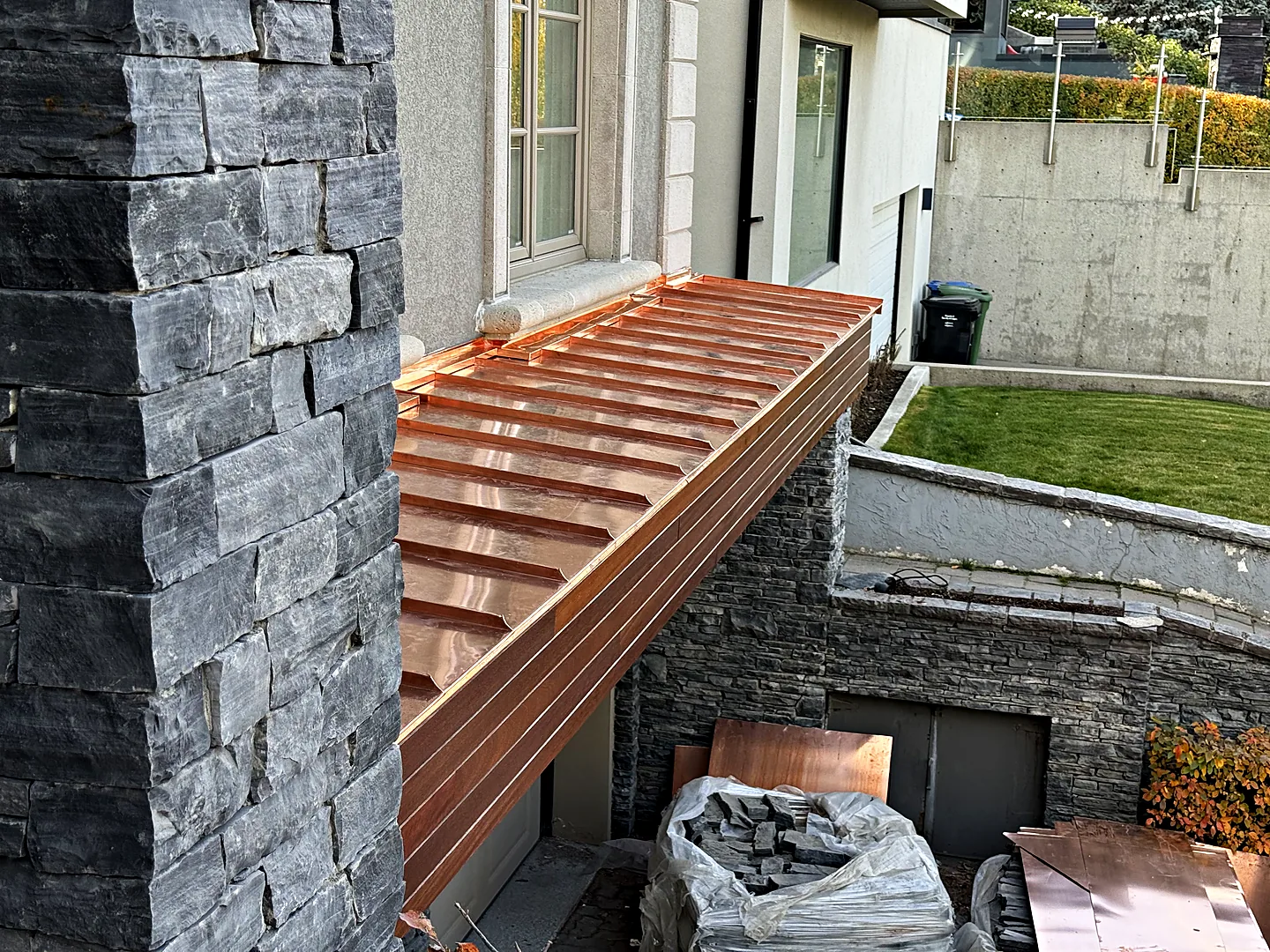
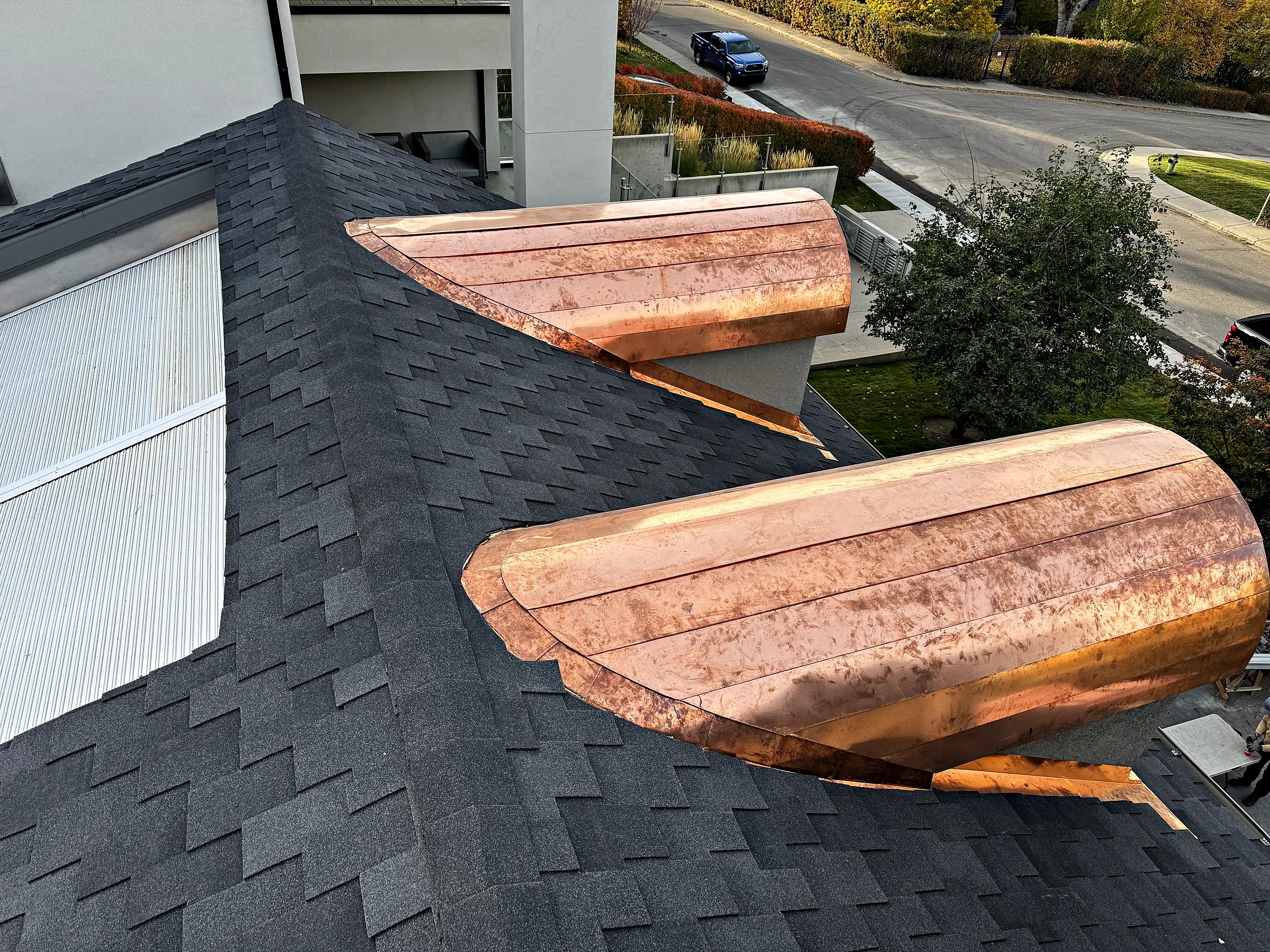
- Bright copper (installation): the surface is reflective and orange-pink, this is unprotected copper at its most reactive.
- Brown/russet stage: copper oxide forms on the surface within the first few months to a couple of years, depending on climate. This is the first real layer of protection.
- Green patina (final stage): copper carbonate and sulfate compounds build into the stable green layer most people associate with aged copper. How fast a roof gets there depends on climate, exposure, and orientation, and it can take a decade or more.
Once that green patina is established, it’s largely self-sustaining. If the surface gets scratched, copper’s patina process starts again at that spot and rebuilds protection over time, unlike a painted panel where a scratch is a permanent weak point until repainted.
What maintenance a copper roof actually needs
This is shorter than most homeowners expect. A well-installed copper roof doesn’t need recoating, resealing, or the kind of periodic maintenance that painted steel or asphalt systems require. In practice, maintenance comes down to:
- Keeping debris out of valleys and gutters, so water isn’t sitting against the metal longer than it should.
- Checking for contact with dissimilar metals after any other work is done on the roof or nearby (more on this below), since this is the single most common way a copper roof’s lifespan gets cut short after installation.
- Periodic visual inspection of flashing and seams, the same way you’d check any roofing system, just far less frequently than you would with shorter-lived materials.
There’s no scrubbing, stripping, or re-patinating step involved. Trying to “clean” or polish copper back to its bright state actually works against the material, it removes the protective layer the roof depends on.
What actually shortens a copper roof’s lifespan
Copper itself doesn’t wear out on any normal timeline. When a copper roof fails early, it’s almost always one of a few specific causes, not the material itself:
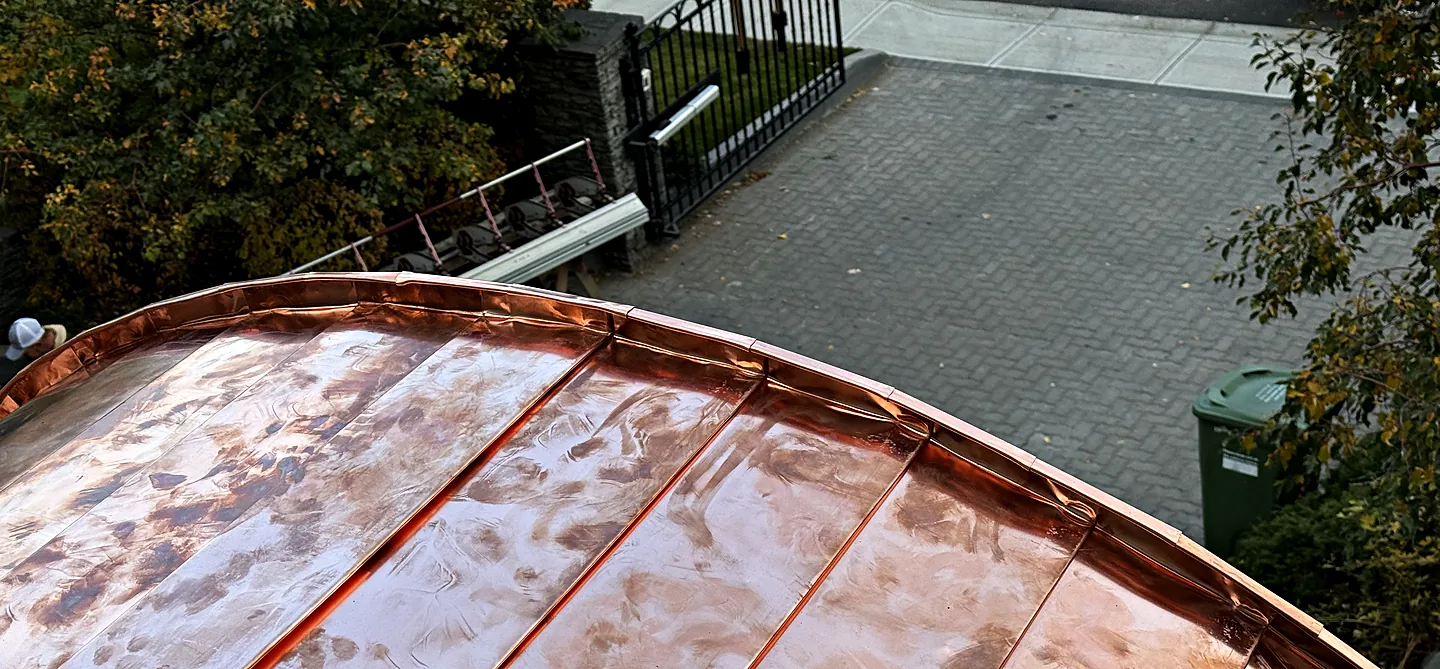
Galvanic corrosion from dissimilar metals. This is the big one, and it’s one of the most common detailing mistakes on mixed-metal roofs. When copper comes into contact with a less noble metal, like zinc, aluminum, or galvanized steel, especially where water runs off the copper onto that metal, it sets up a galvanic reaction that accelerates corrosion of the other metal. Runoff from a copper roof draining onto a zinc gutter, aluminum flashing, or galvanized fastener can cause that second metal to corrode far faster than it normally would. This isn’t a flaw in copper, it’s a basic property of how dissimilar metals interact, and it’s why copper roofs need to be detailed with compatible materials (typically copper or stainless fasteners and flashings) throughout the system, not just at the panels. On large roofs we use factory-made stainless steel clips and screws; on domes and custom work, we make the copper fasteners on site.
Poor fastening for thermal movement. Copper expands and contracts significantly with temperature, more than steel. If it’s fastened rigidly instead of with floating clips that allow it to move, the metal can buckle, and seams can be stressed over time. This is an installation issue, not a material one.
Standing water from poor drainage detailing. Copper resists corrosion very well, but prolonged standing water in a poorly sloped valley or clogged detail will still cause problems over time, the same as it would with any roofing system.
Acidic runoff from certain woods and plant matter, like cedar or moss buildup, can locally affect patina formation in isolated spots, though this is a cosmetic and localized concern rather than a structural one in most cases.
None of these are reasons to avoid copper. They’re reasons the installation matters more for copper than it does for most materials: the roof’s 100-year lifespan assumes it was detailed correctly from day one.
[ FAQ ]How long does a copper roof actually last?
Well-installed copper roofs commonly reach 100+ years of service life. The patina process that protects the metal gets stronger over time rather than wearing down, which is part of why copper has such a long track record.
Does copper need to be sealed or coated to protect it?
No. Copper’s own patina is the protective layer. If you would rather keep the original golden color, a clear protective coating can be applied, but the roof does not need it to last.
Why shouldn’t copper runoff touch zinc or aluminum?
Contact between copper and a less noble metal like zinc or aluminum, especially where water drains from the copper onto it, creates a galvanic reaction that accelerates corrosion of the other metal. This is why copper roofing systems need compatible fasteners and flashings throughout, not just copper panels.
How long does copper take to turn green?
It depends on climate, exposure, and the orientation of the roof. Bright copper darkens within the first months, and the green stage can take a decade or more.
Can scratches on a copper roof be repaired?
Not in the traditional sense, and that’s the point. Copper’s patina process restarts at the scratch and rebuilds protection there over time, the same way it formed originally.
Does a copper roof attract lightning?
No. A copper or metal roof does not make a lightning strike more likely. That is one of the most common myths we hear.
Will copper rust?
No. Copper does not rust the way ordinary steel does. It darkens and slowly develops a natural patina, and that patina is exactly what protects it.
Do you also make copper gutters and custom pieces?
Yes. We fabricate copper gutters and downspouts (round European-style or square), as well as custom copper and zinc work such as fireplace hoods and architectural details.
Tell us about your roof
A copper roof’s 100-year lifespan depends entirely on getting the details right during installation, especially fastening and dissimilar-metal compatibility. If you’re weighing copper for a project, tell us about your project, and with 18 years of working with metal behind us, we’ll walk you through what proper detailing actually looks like.
Get in touch