
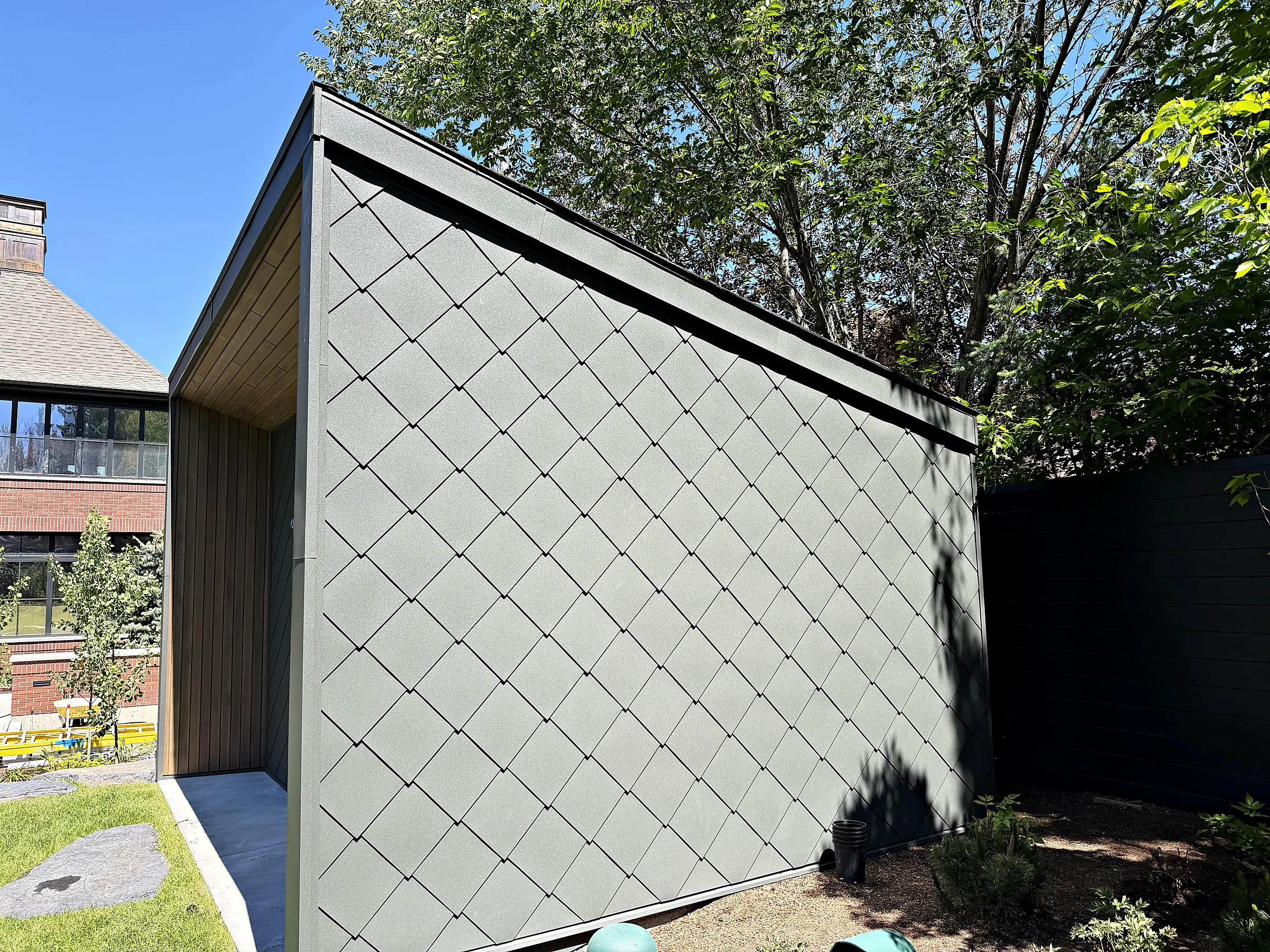
Zinc roofs and cladding
Natural zinc for roofs and walls. It weathers to a soft grey, needs no paint and looks quiet next to wood, stone and glass.
How we build in zinc
Zinc is easy to live with and strict to install. These are the rules we follow.
Cold zinc, around minus 2 °C, can tear when it is bent. We warm each sheet with a heat gun first, so zinc work carries on through winter.
Zinc needs air behind it. Trapped moisture attacks it from the back.
Runoff from copper damages zinc, so the drainage path is planned with the whole building.
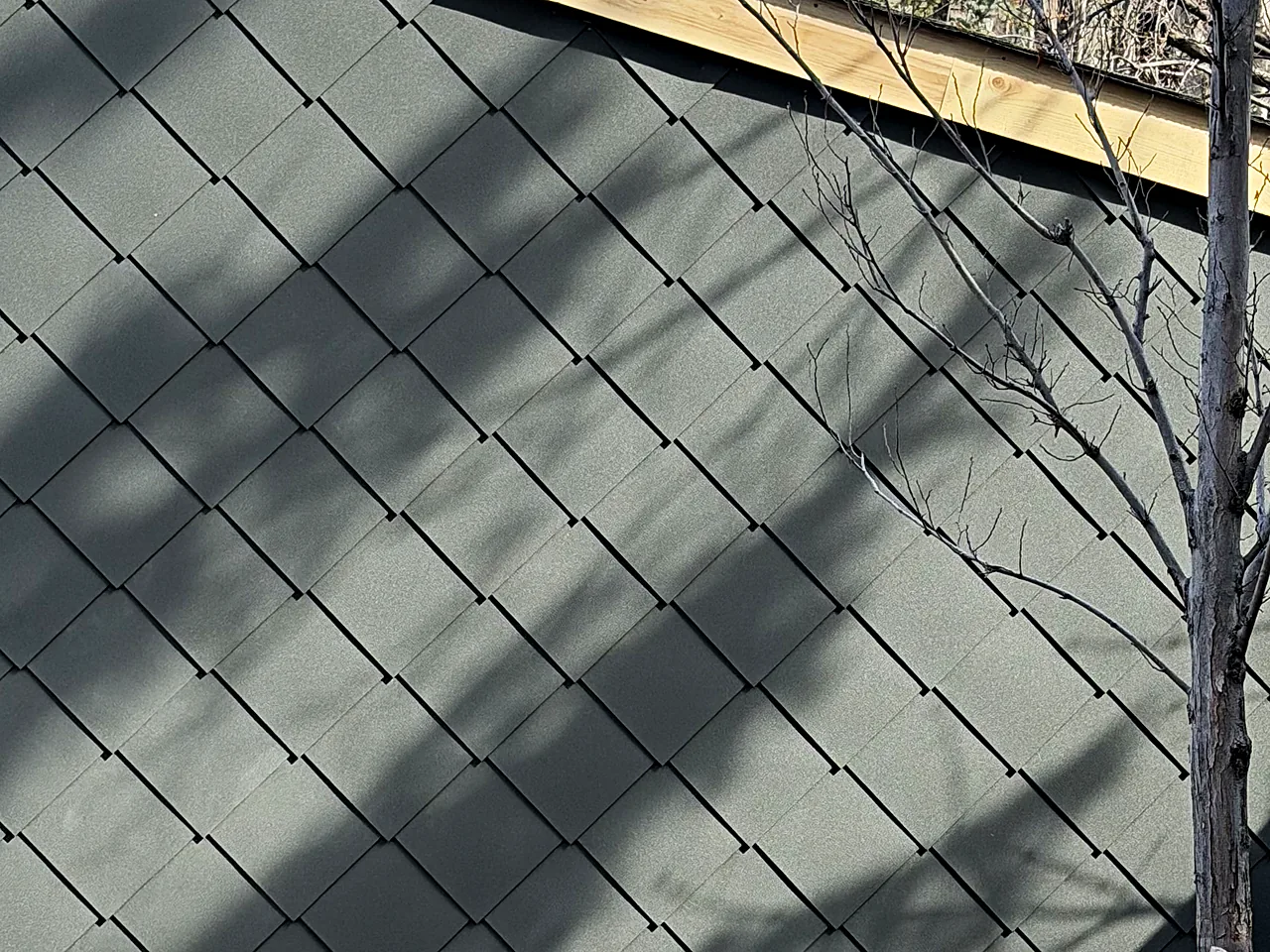
Double-lock standing seam on roofs, flat-lock and panels on walls.
Zinc does not burn.
A metal that looks after itself
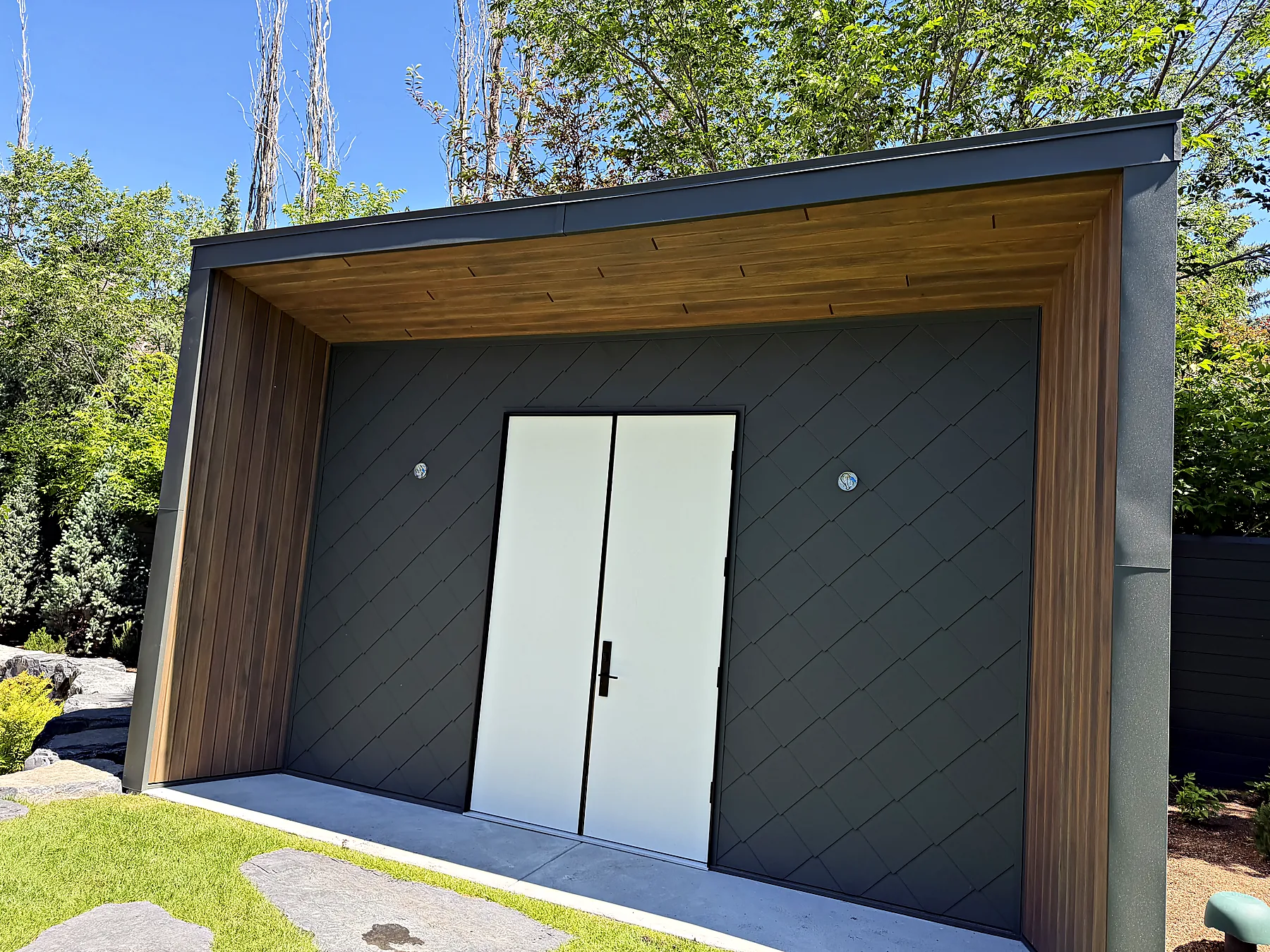
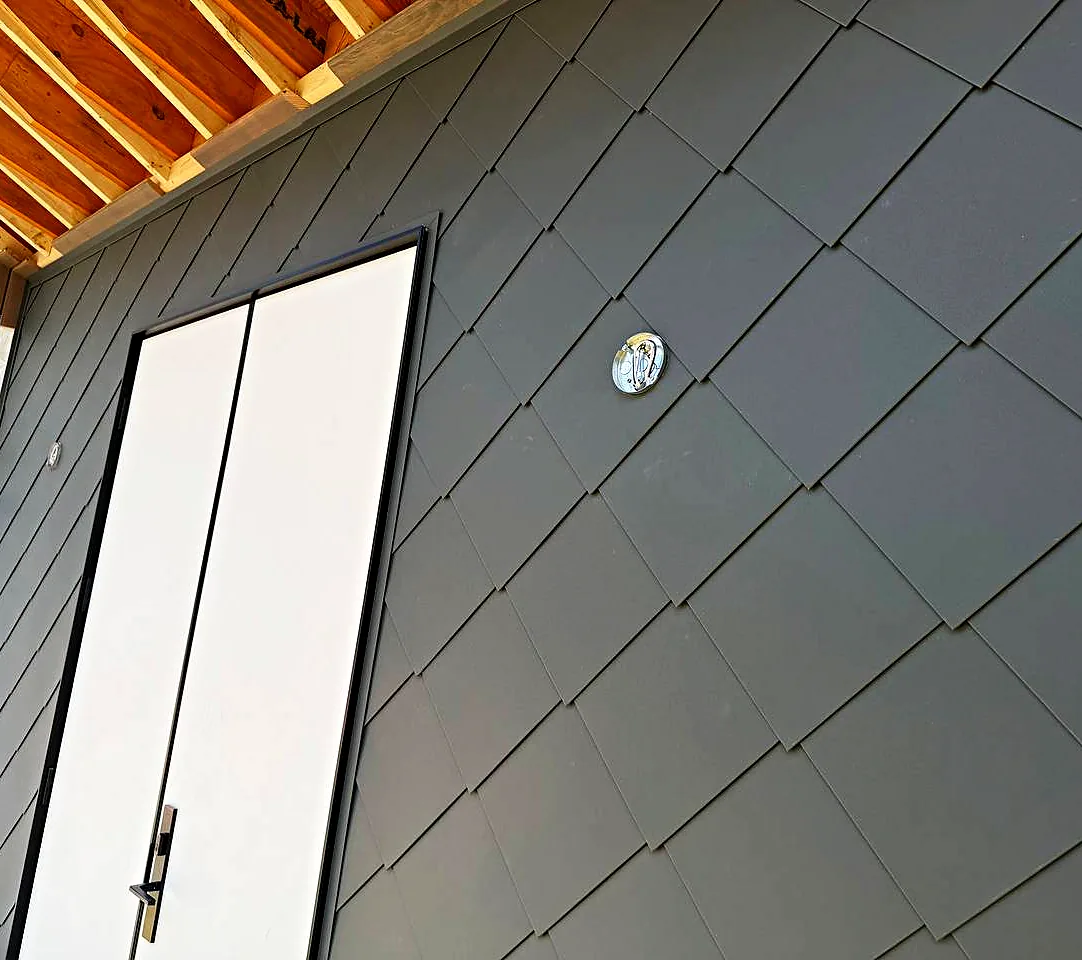
No paint, ever
The grey surface forms on its own and closes over scratches.
Quiet look
Matte grey that sits back next to timber, stone and glass.
Easy to shape
Softer than steel, so curves and tight seams work well when it is warm enough.
Roof and wall in one
The same metal can wrap from the roof down the walls.
Fully recyclable
Zinc can be melted down and used again.
Planned with you
We go through the details and the season with you before ordering.
Good to know
Does zinc work in Alberta winters?
Yes. The cold itself is not a problem. What matters is forming it above +7 °C and ventilating it underneath. Both are decisions made at install.
How does zinc compare with copper?
Zinc costs less and looks quieter: a grey surface rather than a feature. Copper is warmer and changes colour much more over the years.
Can I use it on walls as well as the roof?
Yes, that is one of its main strengths. See metal siding for wall systems.
What will it cost?
Every roof is priced by the same formula: material, area, pitch and shape. Try it on yours.
Start the estimate