
Quick answer
There’s no single number that applies to every metal roof, and we don’t think a flat figure would help you plan a project. Your roof’s size is only one piece of the equation. What really moves the cost is the material you choose, the panel system, how complex your roofline is, and whether the old roof needs to come off first. Once we know those details for your specific roof, we can walk you through a real number. Below is what goes into that number, so the conversation with us starts from an informed place rather than a guess.
[ Estimate ]What goes into your priceFour quick questions about your roof, with what each one changes.Start the estimate →Why we don’t lead with a price range
Metal roofing quotes depend on so many site-specific details that a general number is often more misleading than helpful. A figure found online usually assumes a simple roof, a standard material, and no surprises underneath, and real roofs rarely check all three boxes at once.
In our experience, when an old asphalt shingle roof comes off, the plywood underneath is rotten in roughly 8 out of 10 cases. What looked like a straightforward reroof turns into a decking replacement, which is estimated separately from the new roof. The roofing material itself is rarely the variable that changes a project’s scope; the condition of what is underneath is. That’s the kind of thing a generic estimate simply can’t account for.
What actually drives the cost of a metal roof
Four factors move the price more than anything else:
- Material: steel, zinc, and copper all sit at very different points, and that’s before labor is factored in.
- Panel system: snap-lock standing seam is faster to install; double-lock standing seam costs more, because it needs a seaming machine and a crew trained to run it. We do not install exposed-fastener panels.
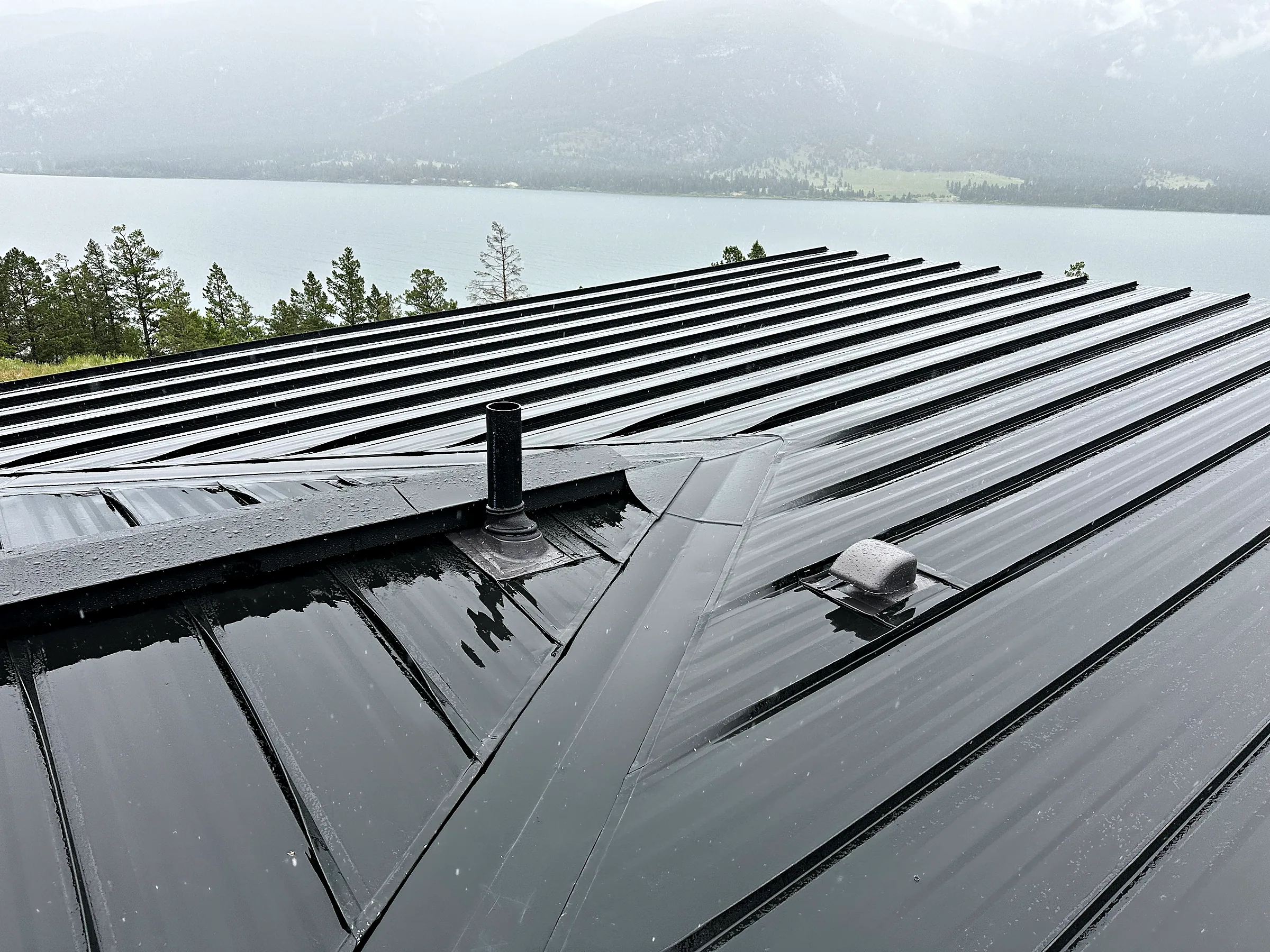
- Roof complexity: valleys, dormers, skylights, and multiple roof planes all add labor and material waste that a simple gable roof doesn’t have.
- Tear-off and decking: removing an old roof, and repairing or replacing decking underneath, adds cost that a new-build roof doesn’t carry, and you often don’t know the real scope of this until the old roof actually comes off.
A 1,500 sq ft roof with a simple gable design and no tear-off will cost differently from a 1,500 sq ft roof with three valleys, two skylights, and damaged decking underneath, even though the square footage is identical. This is exactly why we build every number from your actual roof: drawings if you have them, or a satellite roof measurement report if you do not, never from the floor plan of the house. We visit the site before ordering material.

Material, at a glance
| Material | Where it typically fits | What to know |
|---|---|---|
| Steel, snap-lock standing seam | Steeper roofs only (4:12 and up); we usually recommend double-lock instead | Clean concealed-fastener look, good performance on steeper roofs |
| Steel, double-lock standing seam | Low-slope roofs, high snow or wind exposure | More labor-intensive to install, built for tougher conditions |
| Copper or zinc standing seam | Architectural, custom, or heritage-style projects | Longest lifespan of the group, develops a natural patina over time |
Our standard steel is 24 gauge. This is a starting point for the conversation, not a way to price your roof on your own. The right material for your project depends on your roof’s pitch, your local exposure, and what you want the finished look to be, which is exactly what we walk through on our first call.
Why “1,500 sq ft” doesn’t tell the whole story
Search interest around a “1,500 sq ft metal roof” usually assumes the square footage of the house, not the actual roof area. A 1,500 sq ft single-story home with a simple pitched roof typically has more roof surface than the floor plan suggests, often well over 1,500 sq ft once slope and overhang are accounted for.
This is one of the most common reasons a homeowner’s expectation and a contractor’s quote don’t line up on the first call: the homeowner is picturing the floor plan, the contractor is measuring the roof plane. That is why we measure the roof itself, from drawings or a satellite measurement report.
What else changes the final scope of a project
Beyond material and panel type, a handful of site-specific factors shape every quote we put together:
- Roof pitch: steeper roofs need more safety equipment and take longer to install safely.
- Access and site conditions: tight urban lots, poor ground access, or no crane access all affect how material gets staged and moved.
- Old roof removal: tear-off, disposal, and any decking repair are typically scoped separately from the new roof itself, and sometimes only become clear once the old roof is off.
- No overlays: we always remove the old roof and never install metal over existing shingles. Fasteners lose their grip in rotten decking, and within a couple of years strong wind can lift the roof.
- Snow guards and ice-and-water shield: in Calgary’s climate, snow guards are scoped as their own line item, while an ice-and-water shield goes under every metal roof we install, as building code requires.
None of these show up if you’re comparing roofs by square footage alone, which is why two roofs of the same size and material can still end up with very different scopes of work.
Why Calgary’s climate factors into every quote we write
Calgary’s climate adds a few considerations that don’t apply everywhere:
- Heavier snow load can call for tighter clip spacing or a double-lock seam on lower-slope roofs, rather than a simpler snap-lock system.
- Freeze-thaw cycling and chinook-driven temperature swings are one of the reasons an ice-and-water shield membrane goes under every metal roof we install, as building code requires.
- We keep installing through the winter. Crews work in sub-zero temperatures, and we only stop at around −30°C.
Why won’t you just give me a price range for a 1,500 sq ft metal roof?
Because the same square footage can represent very different projects depending on material, roof complexity, and what’s found once the old roof comes off, which on a reroof is very often rotten decking. A number given without seeing the roof is more likely to be wrong than useful.
Is metal roofing more expensive than asphalt shingles?
Generally yes, upfront. Metal roofing typically costs more to install than asphalt shingles, but it lasts significantly longer and needs less maintenance over time, which changes the comparison when you look at the full lifespan of the roof rather than installation day alone.
Does roof pitch affect the cost?
Yes. Steeper roofs take longer to install safely and sometimes call for different fastening or seam systems, both of which affect labor.
Why do quotes vary so much between contractors for what sounds like the same roof?
Material choice, panel profile, roof complexity, tear-off scope, and underlayment all vary by quote. Two quotes for the “same” roof can differ significantly if they’re not scoped identically, which is exactly why we build every quote from the actual roof: drawings or a satellite measurement report.
What’s the fastest way to get an accurate number for my roof?
Tell us about your project and send drawings if you have them; if not, we order a satellite roof measurement report. We’ll talk through material options and give you a real number based on what’s actually there, not a square-footage estimate.
Tell us about your roof
After 18 years of working with metal, one thing hasn’t changed: the only accurate number is the one built around your actual roof. Tell us about your project, and we’ll walk you through your options and a real number for your project.
Get in touch