
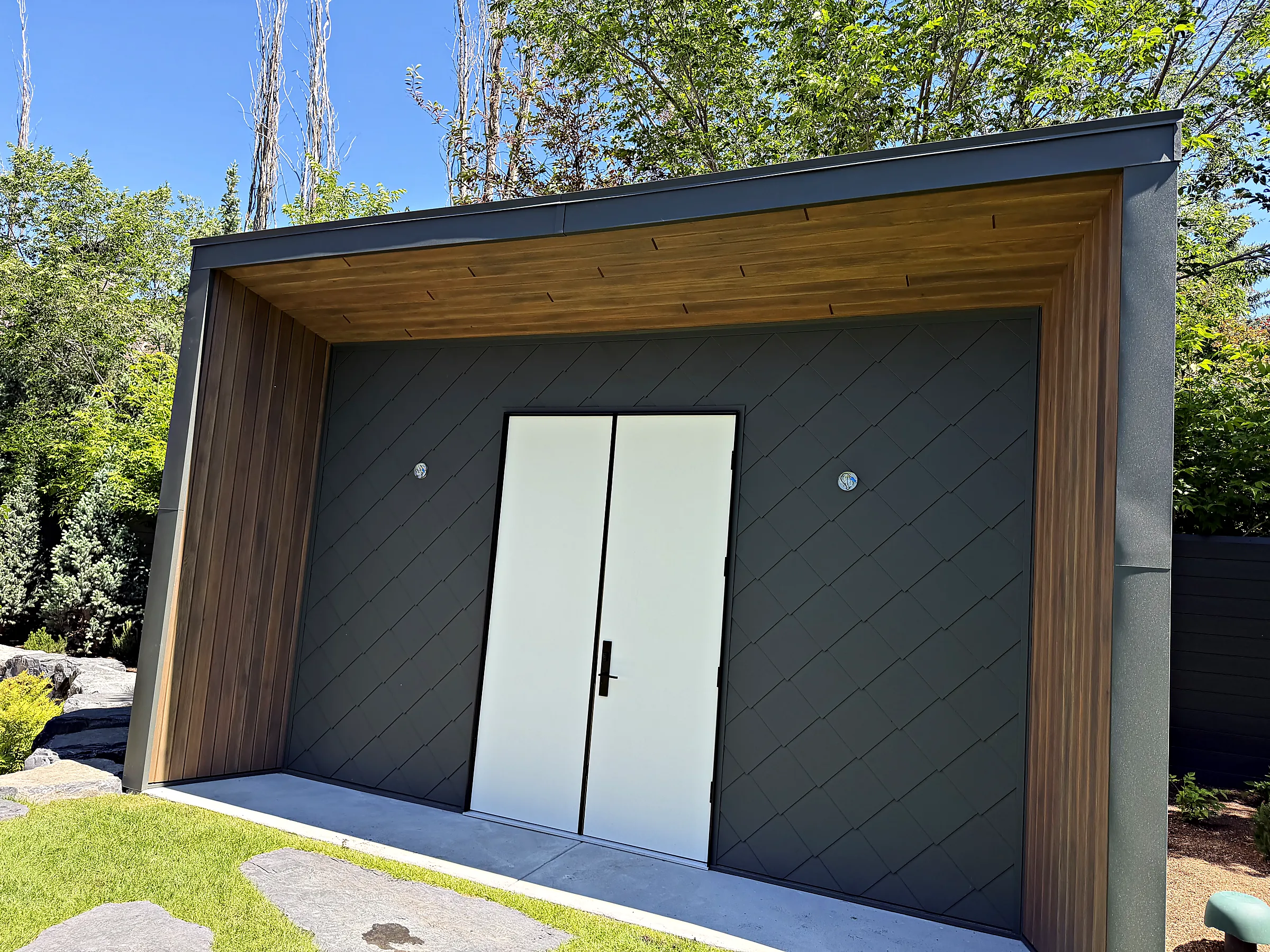
Quick answer
Zinc roofing is one of the least common roofing materials in Alberta, not because it doesn’t perform well in this climate, but because very few contractors are set up to fabricate and install it correctly. It’s a hand-formed, standing-seam material that behaves differently from steel, both in how it’s worked and in how it moves once it’s on a roof. That’s also what drives the cost: it isn’t the raw material alone, it’s the fabrication skill, the slower install process, and the limited number of crews in the province who actually do this work. Below is what that actually involves, and why we’re one of the few shops in Alberta set up to do it properly.
[ Service ]Zinc roofsZinc roofs and walls with a soft grey finish that weathers evenly.See zinc roofs →Why zinc is so rare on Alberta roofs
Search for “zinc roofing Alberta” and you’ll find almost nothing specific to this material or this province. That’s not because nobody wants it, it’s because almost nobody here installs it. Zinc has a long track record in European roofing, where hand-forming standing seam metal is a standard trade skill passed down through fabrication shops. In Alberta, that skill set is rare. Most metal roofing contractors here are set up for steel, with factory-profiled panels and machine-closed seams, because that’s what the market demands at scale.
Zinc doesn’t work that way. It needs to be formed at the right temperature, cut and seamed with different tooling than steel, and detailed by hand around every valley, penetration, and architectural transition. Very few roofing companies in the province have invested in that skill set, which is exactly why there’s so little written about zinc roofing in an Alberta context: there’s almost nobody doing the work to write about. We have even seen zinc fastened with ordinary metal screws, the way you would install steel, instead of being soldered. On a material this expensive, that is a costly mistake.
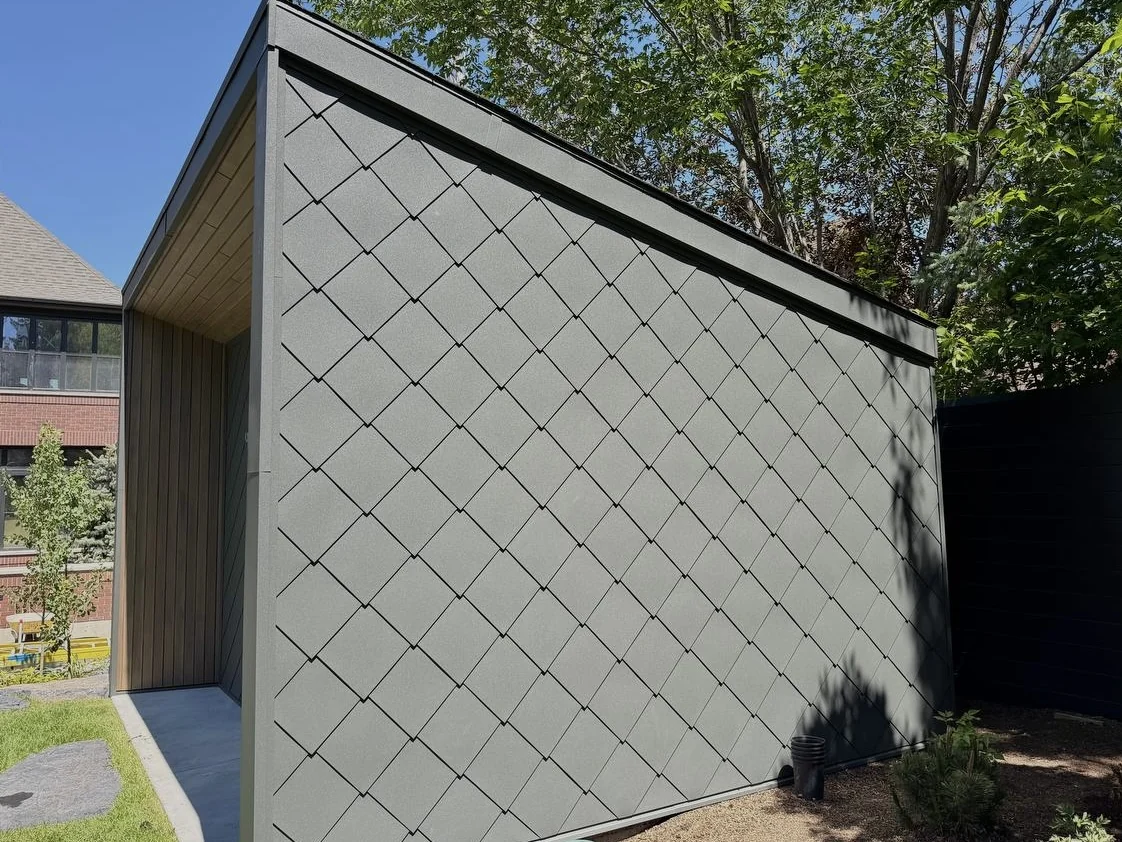
What makes zinc different to work with
Zinc isn’t just “a different colored metal.” It behaves differently on a technical level, and that’s what separates a contractor who can install it properly from one who’s only ever worked with steel.
- Temperature sensitivity: cold zinc turns brittle. At around -2°C it can tear like paper if you try to bend it. We pre-heat it with heat guns, which keeps it soft enough to form cleanly even in deep frost. Steel doesn’t have this limitation, which is part of why most crews default to steel instead of learning zinc’s handling requirements.
- Thermal movement: zinc expands and contracts more than steel across a temperature swing, which matters a great deal in Alberta’s chinook-driven climate. We use floating clips so the metal can move without buckling or pulling the seam apart.
- Self-healing patina: zinc develops a protective oxide layer that can “heal” minor surface scratches over time, a property steel and most coated panels don’t have. This is part of why zinc roofs have such long service lives, but it also means the material has to be handled correctly from the start so that patina forms evenly.
- Hand-formed seams: zinc is typically closed as a double-lock standing seam, formed and crimped by hand on the more detailed parts of a roof, rather than run through a single factory profile from end to end. On flat roofs with parapets, the zinc seams are soldered, which is what allows double-lock to work even on a flat surface.
None of this makes zinc “better” than steel across the board. It makes it a different material with a different skill requirement, which is the actual reason it’s rare here, not because it performs poorly in this climate.
What actually drives the cost of a zinc roof
We get asked for a number on this more than almost any other material, and we understand why: there’s so little to compare it against in Alberta. Rather than quote a flat rate that wouldn’t reflect your actual roof, here’s what genuinely moves the cost on a zinc project:
- Fabrication time: hand-forming seams and details takes significantly longer than running a factory profile, and that labor time is the single biggest driver of cost on a zinc roof.
- Crew expertise: there are very few fabricators in Alberta who do this work regularly, which affects both availability and rate.
- Roof complexity: valleys, dormers, and architectural details all require more hand-detailing in zinc than they would in a standard steel system, so a complex roofline adds cost disproportionately compared to a simple one.
- Material sourcing and lead time: zinc isn’t stocked the way standard steel panel coil is in this market, so sourcing and lead times factor into project planning and cost. We work with RHEINZINK through Cascadia Metals, and delivery usually takes about two weeks.
A zinc roof will cost more than a comparable steel standing seam roof, largely because of labor and fabrication time rather than the raw material itself. The only way to get an accurate number is to send us your drawings or address so we can look at your specific roof. That is true of every material we install; zinc is simply more sensitive to roof complexity than steel is.
Is zinc roofing a good fit for Alberta’s climate?
Despite how rarely it’s installed here, zinc holds up well in Alberta’s conditions when it’s detailed correctly:
- It resists corrosion well, including through freeze-thaw cycling.
- Its self-healing patina means minor surface marks don’t become long-term weak points.
- Properly detailed thermal movement allowances mean it can handle chinook-driven temperature swings without the seam failing over time.
The risk isn’t the material, it’s the installation. A zinc roof installed by a crew without the right experience in cold-forming and thermal detailing is where problems actually show up, not from the metal itself.
[ FAQ ]Why is zinc roofing so uncommon in Alberta?
Mostly because very few contractors in the province have the fabrication skills and tooling to work with it properly. It’s a hand-formed material in a market that’s largely set up for factory-profiled steel.
Is zinc roofing more expensive than steel?
Generally yes, primarily due to the labor and fabrication time involved rather than the raw material cost. The exact difference depends heavily on your roof’s complexity.
Does zinc perform well in cold climates like Alberta’s?
Yes, when it’s detailed for thermal movement and formed correctly. Cold zinc is brittle, so it has to be pre-heated before forming in freezing weather. The material itself is well suited to this climate; the installation is where experience matters most.
What is the self-healing patina people mention with zinc?
Zinc develops a protective oxide layer over time that can repair minor surface scratches on its own, a property that gives zinc roofs part of their long service life.
How do I know if a contractor is actually qualified to install zinc?
Ask about their fabrication process specifically: do they hand-form and solder seams and details, and have they installed zinc in this climate before. Experience with steel standing seam doesn’t automatically transfer to zinc.
Tell us about your roof
Zinc isn’t a material most Alberta contractors can speak to with real experience; after 18 years of working with metal, we can. If you’re considering it for a project, tell us about your project and we’ll walk you through whether it’s the right fit for your roof.
Get in touch